
Odia is the official language of the state of Odisha. It is one of the classical Indo – Aryan languages. Odia is the sixth Indian language to be designated a classical language status. It is one of the oldest languages, It descends from Odra Prakrit which itself evolved from Magadhi Prakrit. The latter was spoken in east India over 1,500 years ago and is the primary language used in early Jain and Buddhist texts.
The history of the Odia language is divided into the following phases or eras. They are:
- Proto odia: (10th century and earlier): Inscriptions from 9th century show the evolution of proto-Odia, i.e. Odra Prakrit or Oriya Prakrit words used along with Sanskrit.
- Old Odia : (10th century till 13th century): Inscriptions from the 10th century onwards provide evidence for the existence of the Old Odia language, with the earliest inscription being the Urajam inscription of the Eastern Gangas written in Old Odia in 1051 CE.
- Early Middle Odia :(13th century–15th century): The earliest use of prose can be found in the Madala Panji of the Jagannatha Temple at Puri, which dates back to the 12th century.
- Middle Odia:(15th century–17th century): Sarala Das wrote the Mahabharata and The Bilanka Ramayana in this era. Towards the 15th century, Panchasakha ‘five seer poets’ namely Balarama Dasa, Jagannatha Dasa, Achyutananda Dasa, Sisu Ananata Dasa, and Jasobanto Dasa wrote several popular works, including the Odia Bhagabata, Jagomohana Ramayana, Laxmi Purana, Haribansa, Gobinda Chandra and more.
- Late Middle Odia: (17th century–Early 19th century): Usabhilasa of Sisu Sankara Dasa, the Rahasya Manjari of Deba Durlabha Dasa, and the Rukmini Bibaha of Kartika Dasa were written. Upendra Bhanja took a leading role in this period with his creations Baidehisa Bilasa, Koti Brahmanda Sundari, and Labanyabati which emerged as landmarks in Odia Literature.
- Modern Odia – The rise of the linguistic movement : (Late 19th century to present): Odisha, a once-mighty nation stretching from the Ganga to the Godavari, suffered a prolonged period of disintegration. Beginning with King Mukundadeva’s death, this fragmentation continued until 1936. This led to making Odiya become minorities and feeling neglected & dejected. There arose a great fear among the Odias who felt suppressed in the light that their language was threatened. And when a language becomes extinct, the culture, the tradition … everything associated with it also gets wiped away. The Orissa intelligentsia suspected that their language would be displaced by Bengali as the medium in schools and the language in the court and offices. The main basis of their fear was one small book, Odiya Ekti Bhasa Naye, written by one school teacher, Kanti Chandra Bhattacharya, in Balasore in 1872. The book argued that Oriya was not a language, but a variant of Bengali! Adoption of Bengali as the official language was in the interest of Utkal, Rajendralal Mitra, a scholar from Calcutta argued in a lecture in Cuttack in 1865. Not only this, there was a threat from the south too as a part of the Madras Presidency, Oriya had already been replaced by Telugu in the offices as well as in schools. In the Western part of the state, In the western Orissa comprising Sambalpur, the threat was equally strong. In 1895 the chief commissioner of the Central Provinces issued an order to use Hindi in place of Oriya in the Offices and in the schools. In all government offices, the lower-level officials were Bengali-speaking and strongly advocated for replacing Oriya with Bengali. There were many other injustices done where Odiyas were reduced to a meager community & there was a deliberate attempt to dominate & make this language unrecognized. But the unity & the zeal to save the mother tongue was so strong among the Odia intelligentsia that all such motifs were put to rest. The rising middle class in the state was bursting with new ideas to unite the masses & their persistent effort with the relentless work of eminent writers & poets like Fakir Mohan Senapati & Gangadhar Meher. During this phase, Odisha’s educated elite sought to reform society through initiatives like promoting education and championing women’s empowerment. They drew inspiration from social reform movements across India. One notable outcome of the linguistic movement was the coming of intellectuals from different parts of Orissa under one political platform, the Utkal Sammilani, translated as the Utakl Union Conference (UUC), which was founded in 1903. Utkala Gauraba Madhusudan Das, who was an Indian lawyer & philosopher played a pioneering role in this movement. No doubt this movement was mainly amongst the intelligentsia but it did pave the way for the consolidation of Odia-speaking areas, aiming to restore unity and protect Odia culture. The first Odia newspaper Utkala Deepika, launched in 1866. Fakir Mohan Senapati emerged as a prominent Odia fiction writer of this time and Radhanatha Ray as a prominent Odia poet.

Fakir Mohan Senapati known as the Utkala Byasa Kabi, was an Indian writer ( Novelist), poet, philosopher, and social reformer.
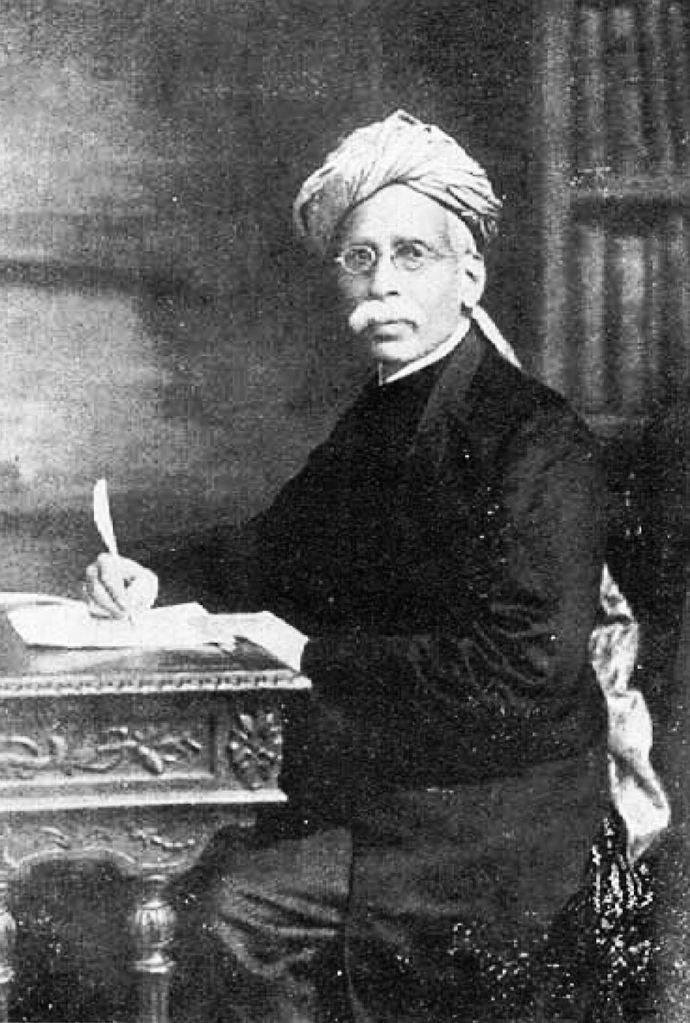
The legend- Utkala Gauraba Madhusudan Das
Apart from this, there are many dialects of the Odia language and one can sense different variations while to different corners of the state. The tribal community of the state has their own distinct languages.
So one can say that language or the mother tongue is not just a medium to communicate but it is the very identity of the people speaking it. It reflects their tradition, and culture & mirrors their way of life. And if there ever comes a threat to sabotage a language, then there will always be a rising force to resist it so that Bhasha or the language lives on even after generations are gone. There are numerous classics, epics & poems that resonate with the heartbeat of all the Odias but this blog post does not give me enough space to discuss them in detail. As they say, Odisha is India’s best-kept secret, so I welcome all my readers to visit this beautiful & intriguing state & immerse themselves in its rich heritage & culture which will help them understand better the complications Odias had to face to save their own identity. Because Odias, though immensely proud of their identity, mostly fail at blowing their own trumpet miserably!
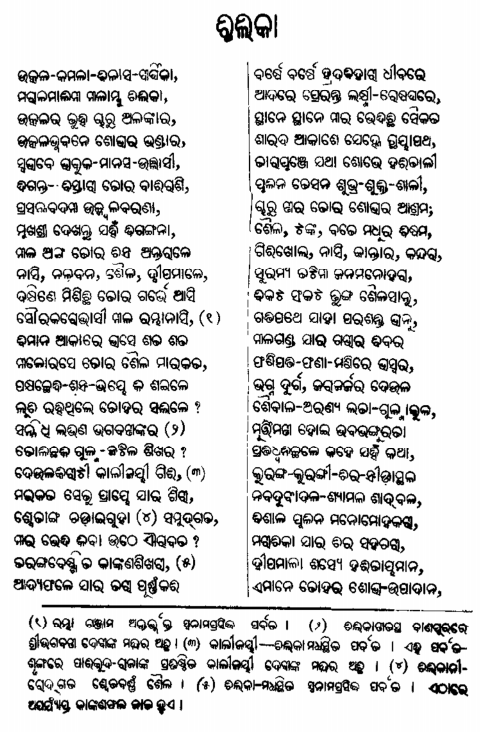
Below is one of the famous poems titled ‘Chilika’ ( Based on the largest saltwater lake in Asia- Chilika ) which was composed by one of the very famous Odia poet – Radhanatha Ray.

Famous Poet- Radhanatha Ray
P.S. Source of information, various govt. websites, Wikipedia & other sources focusing on content concerning the Odia language
Love,
Chinmayee
“This post is a part of ‘ Embrace the Native ’ Blog Hop hosted by Manali Desai and Sukaina Majeed #EveryConversationMatters”
 Chinmayee's Creations
Your post made me appreciate Odia in a whole new way! Thank you for this wonderful read.
LikeLike
Very well researched post. Really enjoyed reading the history of Odia .. especially how it stood ground before Bengali!
LikeLiked by 2 people
Thanks a lot for stopping by my blog. Glad you liked it.
LikeLike
Thanks a lot for your kind words.
LikeLiked by 1 person
Such a well redearched post 👍 i have actually heard many curfew stories between the Odia and Bengali communities from my mother and grandmother and knowing the detailed history has really helped 👍
LikeLiked by 1 person
I am so glad to read your kind words! Thanks a lot.
LikeLiked by 1 person
I think most classical Indian languages will have similar history of evolution.
LikeLike
Thanks a ton for stopping by my Blog Sir!
LikeLike
Reading detailed research about Odia makes me feel so small, humble. We think we know much, abundant, but this huge work served to us on our platter makes me feel we are lucky, privileged to be blessed with such a rich heritage.
LikeLiked by 1 person
Thanks a lot for reading and sharing your heartfelt thoughts.
LikeLike
I must appreciate the research you’ve done for your post Chinmayee… It is quite extensive. I have neither studied in school nor done any reading on Odia literature, so for me it was really informative. It is evident from your post and really admirable that you are deeply attached to your state and everything about it. I just wish you had translated the poem for us.
LikeLiked by 1 person
Thanks a ton for your kind words. Will try to translate it in a separate blog post.
LikeLiked by 1 person
It’s great to know how Odia originated and its various stages in different eras. Please translate the poem too. I’m sure it has a lovely meaning.
LikeLiked by 1 person
Thanks a lot for stopping by & will probably write a blog & translate the poem. Thanks for the idea.
LikeLike
India is the only country where we have various languages and each language is unique. Your post tells us the history and your love for the odia language. I do not know this language at all. Our languages are the treasure for us and I am glad to read it through this ECM blog hop.
LikeLiked by 1 person
Thanks a lot for your appreciation.
LikeLike
Thank you for this post and introducing me to the Odia language. Loved the written script of the language. Got to know about the history of the language and its famous author.
LikeLiked by 1 person
Thanks a lot for stopping by & appreciating!
LikeLike
I had heard of the Rasogolla war but it extended to the origins of Odia language itself is a revelation.
I had only heard of Gangadhar Meher , so thank you for introducing us to other respected names in Odia literature.
LikeLiked by 1 person
Thanks a lot for stopping by! I am so glad I could share my thoughts with you.
LikeLike
That’s so insightful to read through, and I am so glad that I could come across Odia and its history. It allows me to think about other languages in general as well because I am sure every language has its own unique history
LikeLiked by 1 person
Thanks a lot, Tanvi for reading & appreciating !
LikeLike
I recently had the chance to stay in Odia for a few months. And I absolutely can see how the change in dialect is so apparent.
LikeLiked by 1 person
You mean stayed in ‘Odisha’ and the language variation in ‘Odia’ language were aparent ? Yes various parts have variation in dialects. Thanks for reading my blogpost !
LikeLike
This was such an insightful and well-articulated piece! The resilience of the Odia people in preserving their language and cultural identity is truly inspiring. The role of visionaries like Fakir Mohan Senapati and Madhusudan Das in shaping Odisha’s linguistic and literary landscape is remarkable. Language is indeed more than just a medium of communication—it carries the soul of a community. Loved reading this, and now I’m even more intrigued to explore Odisha’s literary and cultural heritage!
LikeLiked by 1 person
Odisha / Utkla is one region about which, unfortunately, I am not much aware about. Thank you so much for such a detailed informative article. I had listened to a few Odia songs before. But my interaction with Odia culture was limited to this only. I am now more intrigued about it and will take some efforts to know more.
LikeLiked by 1 person
Thanks for sharing such a detailed and well researched piece, Chinmayee. I have heard of Odia vs Bengali thanks to my family in Kolkata and Bhubaneshwar. Each language has its place. I have picked up The Big Book of Odia Literature that I am looking forward to reading soon.
LikeLiked by 1 person
This article is more like Wikipedia to Odia. Thanks for introducing me to this beautiful language.
LikeLiked by 1 person
Thanks a lot ❤️ 🙏
LikeLike
i am startled to read about odia language especially about its deformations through ages. It is well penned and informative post.
LikeLiked by 1 person
Thanks for reading 📚
LikeLike
This was a masterclass in Odia language and its rich history and cultural roots. Thanks for sharing, Chinmayee 🙂
LikeLiked by 1 person
Thanks a lot for your comments ❤️
LikeLike
Wow. Informative and well researched. Some of my short stories (set in Odisha) were translated into Odia, to be aired on Big FM, so I listened to them. Odia sounds so sweet. Even the script looks beautiful.
LikeLiked by 1 person
Thanks a ton ♥️ and I am honoured to know that your stories have been adapted in Odia 🙏✨️
LikeLiked by 1 person
this is a wonderful comprehensive post about a language that’s not discussed or talked about enough. Thank you for shedding light on these aspects of the language.
LikeLiked by 1 person
Thanks a lot for your kind words.
LikeLike